
HVAC Bookkeeping by Stage
Managing the Books at Every Stage
How an HVAC owner should think about the numbers and the systems behind them as the business grows.
Most HVAC owners are great in the field and flying blind on the numbers. The problem is what you need to watch changes as you grow. The advice that fits a one-truck operator is the wrong advice for a five-truck shop.
The two numbers you never stop watching:
Gross margin (are you underpricing?)
Net margin (is overhead bloating?).
These matter at every stage from $200K to $5M & beyond. Everything else on this page is a finer cut of those two.
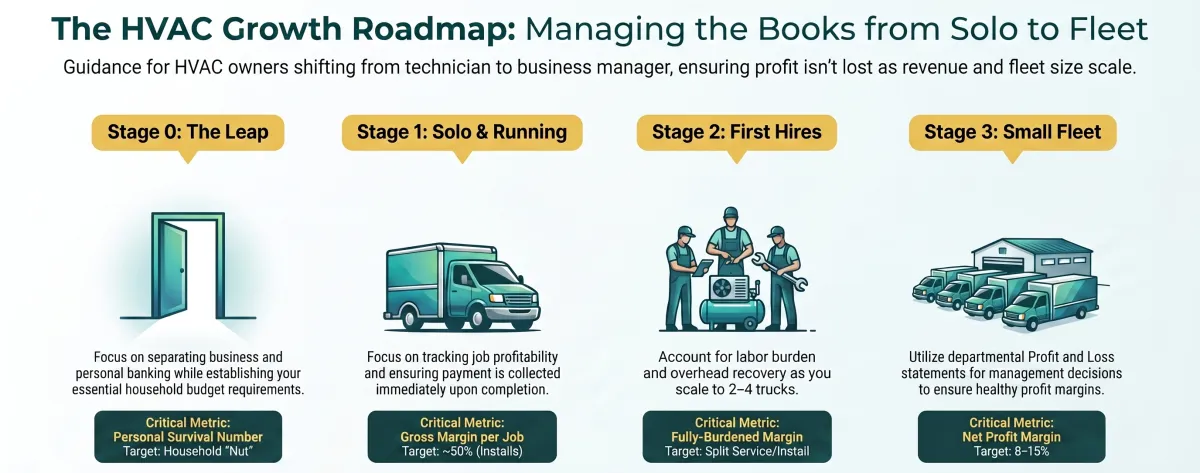
Stage 0 - Before the Leap
Roughly $0–$150K, one truck (or about to be). Still on someone else’s payroll, or just gave notice. Great tech, never run a business. This is the scariest and most important financial stretch there is, and almost nobody plans it.
The shift: you’re about to stop being a tech who gets paid and start being an owner who has to make sure everybody gets paid including you, and you’re usually last in line.
What hurts:
The Friday paycheck is going away and nothing guaranteed replaces it. That’s a bigger mental shift than most techs expect.
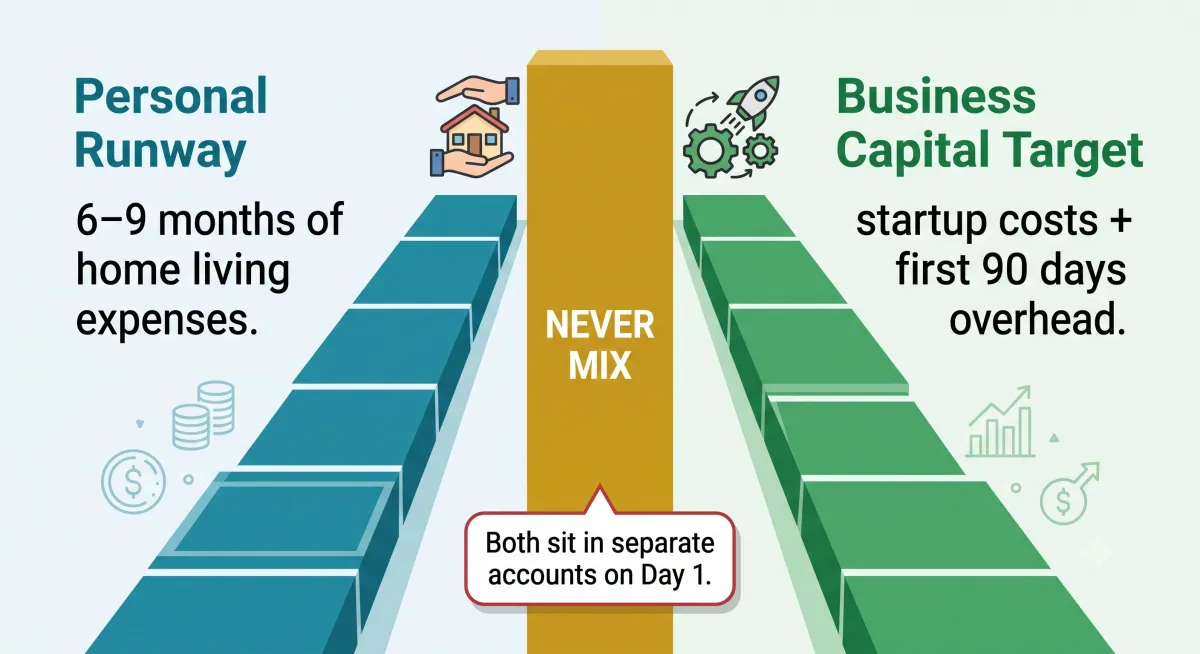
No real idea how much cash it takes to start, and to survive the slow first months before the phone rings steady.
The spouse is nervous. Money fights at home kill more new shops than bad workmanship ever will.
Everybody says “just go for it.” Nobody hands them the numbers.
Where they get it wrong:
Running everything through the personal checking account “for now.” That “for now” turns into a two-year bookkeeping mess and a cleanup bill.
Underestimating startup cash such as truck, tools, insurance, licensing, and the dead weeks with no revenue.
Buying the $75K wrapped truck before there’s a single paying customer.
Starting work before the license, bond, and insurance are actually active. One claim ends the business before it starts.
Not setting anything aside for taxes from dollar one. The first April is brutal when it’s a surprise.
Pricing scared and taking the first jobs cheap to win them, then anchoring your prices there forever
The numbers that matter:
Personal survival number: What your household costs to run for one month. This is the floor everything else sits on.
Startup + runway: The real cash you need in the bank before you quit, not the optimistic version.
We dive into how to calculate these numbers in detail here: The Full Solo Pre-Launch Checklist
The system at Stage 0 should be dead simple:
Banking: Get an EIN before the first dollar moves and open a business checking account. Building the wall between personal and business now is the cheapest thing you’ll ever do and it saves you thousands later.
Scheduling: a Google Calendar is fine. Don’t buy software yet.
Books: Set the chart of accounts up right from day one, with COGS (materials, labor, subs, permits) split out . The day you want to know your margin, the books can actually tell you. Need a chart of accounts? Check out our free resources here
Everything else waits until there’s money coming in.
Stage 1: Solo and Running
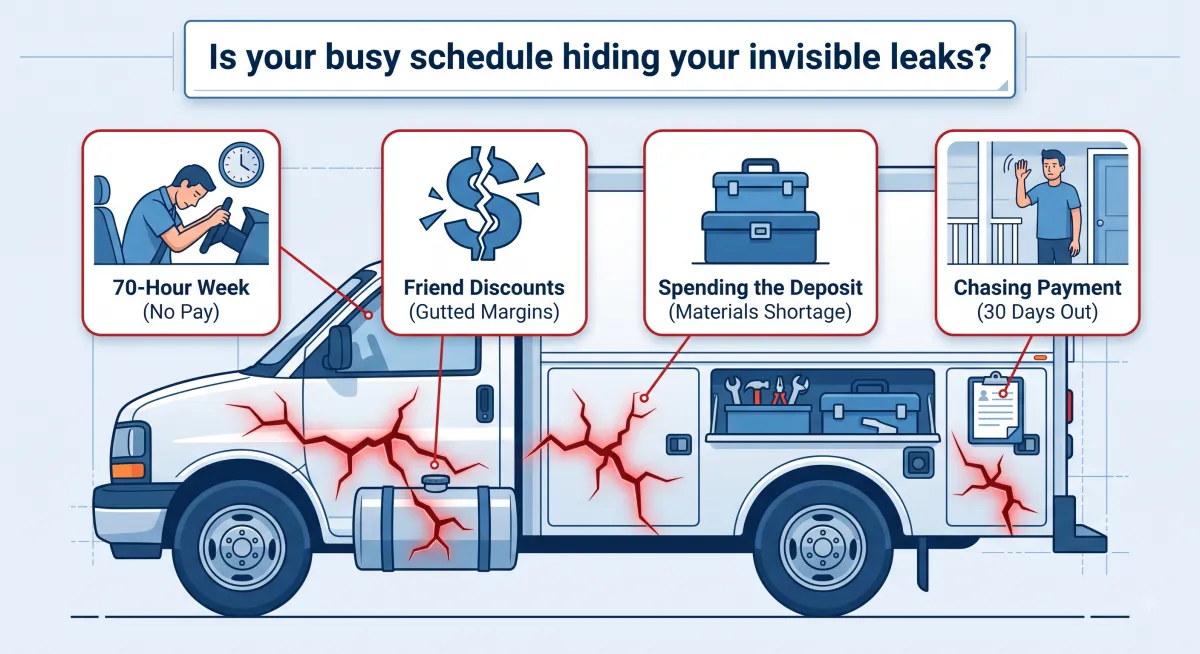
Roughly $150K–$400K, one truck. Phone’s ringing, invoices are going out, you’re working 70-hour weeks. Making money on paper and can’t figure out why the bank account never shows it. This is where the quiet bleeding starts, and it’s invisible until you go looking.
The shift: From “did I get paid?” to “what did that job actually make?”
What hurts:
Busy but broke. Revenue looks fine and the account is always tight.
Cash is feast or famine. Flush after a big install, scrambling for materials two weeks later.
No idea which jobs, or which kind of work, actually make money.
Paying yourself last, or whatever’s left, which some months is nothing.
The tax bill blindsides you, because nothing got set aside during the year.
Where they get it wrong:
Pricing off the old boss’s rate. You don’t know your own break-even, so you’re copying a number that may have never made sense for your costs.
No job costing. You quote the install off feel, the crew burns two extra hours and a second trip for a part, and you never find out the job barely broke even so you quote the next one exactly the same.
Treating the deposit like profit. That money down isn’t yours yet. Spend it and you’re short on materials for the job you took it for.
Not collecting in the driveway. You leave the residential job open and then chase the customer for 30 days.
Commingling and DIY QuickBooks. Six months of personal charges and miscoded deposits become a cleanup project.
No tax reserve. You spend like the gross is all yours, then the return shows up and there’s nothing set aside.
Friend-and-family discounts and “while I’m here” freebies that quietly gut the margin on half your jobs.
Leaving maintenance agreements on the table; they can be the recurring revenue that smooths out your slow months.
| Number | Target | Why it matters |
|---|---|---|
| Gross margin per job | Installs: 42–52% Service: 55–65% |
Under target means you priced it wrong. You want to know before you bid the next one, not at tax time. |
| Owner’s pay | Planned withdrawals (see Profit First) | If you’re the residual, the business is training you to work for free. |
| Collected at completion | Near 100% | Getting paid in the driveway is the single fastest fix for solo cash flow. |
The system at this stage:
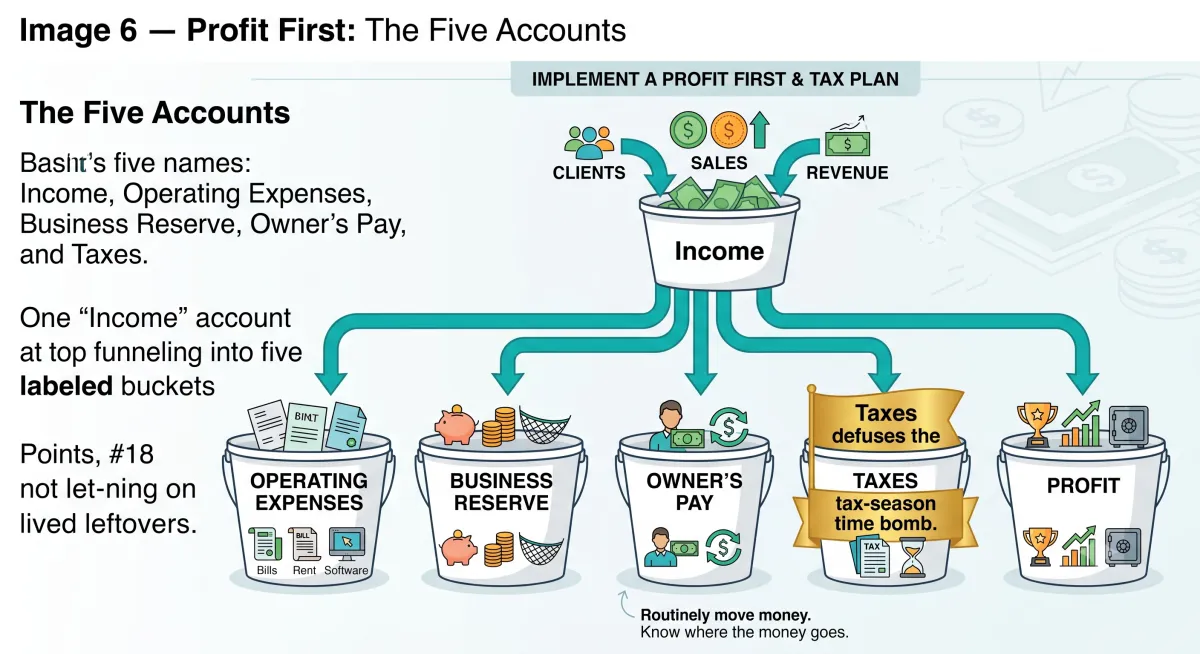
Banking: If you're struggling to pay yourself consistently, add the Profit First accounts: income, owner’s pay, tax, operating. Even done rough, it stops you treating the whole balance as spendable.
Business credit card: Good for clean separation, points, and a little float. It is NOT working capital. If you’re carrying a balance to cover operating costs, the real problem is you’re undercapitalized or underpriced. Pay it in full every month!
Field service software: This is where I’d get them on Jobber or Housecall Pro. Not for job costing, that part’s weak. For the fact that they’ll learn the system while the business is simple, and it runs scheduling, dispatch, invoicing, and collect-at-the-door out of the box. Putting it in now beats ripping it in later when you’re drowning and hiring your first tech.
Job costing: Honestly, many of the lower tier FSMs won’t cost jobs well, so at solo the margin picture lives in QBO Projects, or you hand-enter actual costs against the job in the FSM. That’s great for costing but it won’t sync to QuickBooks, so it’s double entry. Either way, don’t try to cost all 200 jobs. Cost your installs and a sample of service, enough to fix your pricing.
Getting paid: Invoice and collect on completion, residential especially. Card, check, cash, and ACH at the door.
AP and receipts: Snap every receipt (QBO is fine to start), and start using vendor terms. Net 30 from the supply house is free working capital.
Payroll: Once you’re an S-corp, run owner payroll through Gusto or Patriot so your pay is a real, scheduled thing.
Stage 2 - First Hires
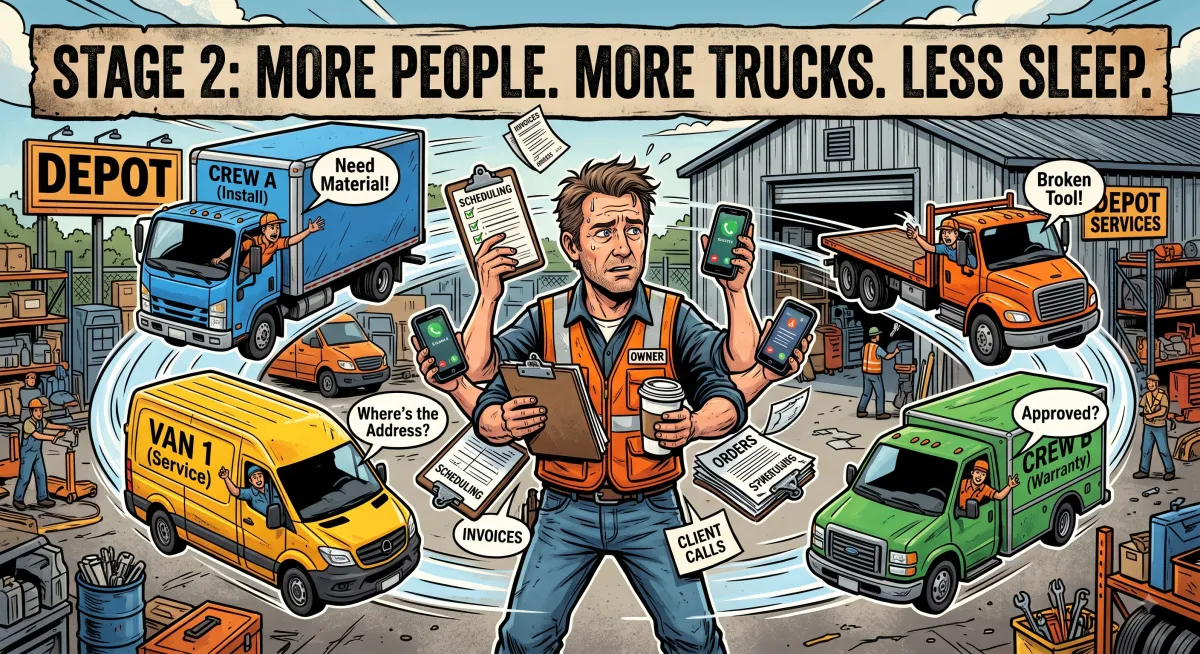
Roughly $400K–$1.2M, 2–4 trucks. You added a tech or two, maybe an office person. Revenue is up. And somehow there’s less money in the bank than when it was just you. This is the wall almost every shop hits, and it’s where a lot of them stall out or quietly go backward.
The shift: from “am I profitable?” to “which work is profitable?”
What hurts:
More trucks, less money. Revenue grew, profit shrank, and nobody can say why.
Can’t tell which crew, which trade, or which kind of job is carrying the company and which is dragging it.
Payroll cash crunches. The biggest bill in the business now lands every two weeks whether the customers paid or not.
You’re still doing the invoicing at 9pm because the office isn’t really built yet.
Callbacks and warranty work quietly eat margin, and nobody’s measuring what they actually cost.
Where they get it wrong:
No labor burden in the cost. You count the tech’s wage but not the payroll taxes, comp, benefits, truck, fuel, and windshield time. So a “profitable” job is actually losing and you can’t see it.
Overhead never gets recovered in the price. Rent, office wages, software; none of it baked into the rate, so every job quietly underpays for the building it runs out of.
Blending service and install into one margin number. They behave completely differently, and blended they hide each other’s problems.
Letting AR drift because everybody’s too busy to chase it.
Comp plans that don’t tie tech pay to profitability or efficiency. You pay the same whether the job made money or not.
The owner is still the best tech in the company, so nothing runs without him and the business can’t scale.
Not raising prices as costs climb, so last year’s margin quietly becomes this year’s break-even.
| Number | Target | Why it matters |
|---|---|---|
| Gross margin per job | Installs: 42–52% Service: 55–65% | Under target means you priced it wrong. You want to know before you bid the next one, not at tax time. |
| Overhead % of revenue | 20–35% | If it climbs faster than revenue, growth is making you poorer. |
| Break-even hourly rate | Known, priced above | Charging $85 when you break even at $90 means every billed hour costs you money. |
| AR over 30 days | Minimal | Growth eats cash. Drifting AR turns a profitable month into a payroll scramble. |
The system at this stage:
Field service software: Still Jobber or HCP as the operating system utilizing dispatch board, service agreements, the works.
Job costing (the crux at this stage): When you evaluate any software, look at everything it does: dispatch, scheduling, invoicing, quoting. Then, for profitability specifically, ask one more question: can it take actual expense costs so job costing can live in the FSM? Jobber and HCP can. You enter actual material costs against the job and it’s genuinely good for costing. The catch is it won’t sync to QuickBooks, so it’s duplicate entry in both. It’s still worth doing to stay on top of profitability. Labor is the easy half because the FSM time tracking plus a burden rate gets you actual hours at real cost. And don’t cost everything: cost by exception. When the monthly review shows a job type coming in soft and you don’t know why, that’s when you pull those jobs apart and find the leak.
The holy grail would be automation that pushes your actual costs into the FSM for you, so nothing’s hand-entered. Nobody has productized that for Housecall Pro or Jobber yet. So for now the honest answer is the manual method above, done consistently, with cost-by-exception keeping it from taking over your life.
People: Payroll on Gusto or Patriot, and now time tracking against jobs so labor lands where it belongs.
AP and cards: This is where Ramp shines if you're on top of your cash flow. Corporate cards with spend controls, bill pay, and receipt capture in one place. Because it’s a charge card paid in full each month, it keeps you off revolving debt by design. Vendor terms are still your cash-flow lever, so protect those relationships since they’re floating your materials.
Books: Monthly close and a real variance review start earning their keep. This is usually where an outside firm pays for itself.
Stage 3 - Small Fleet
Roughly $1.2M–$5M, 5–15 trucks. Departments, a team, and an owner who can’t hold the whole thing in his head anymore. The gut that got you here stops being enough, and the decisions get expensive.
The shift: from working in the business to reading it. Decisions off the numbers, not the gut.
What hurts:
“I can’t see the business anymore.” Too many moving parts to track by feel.
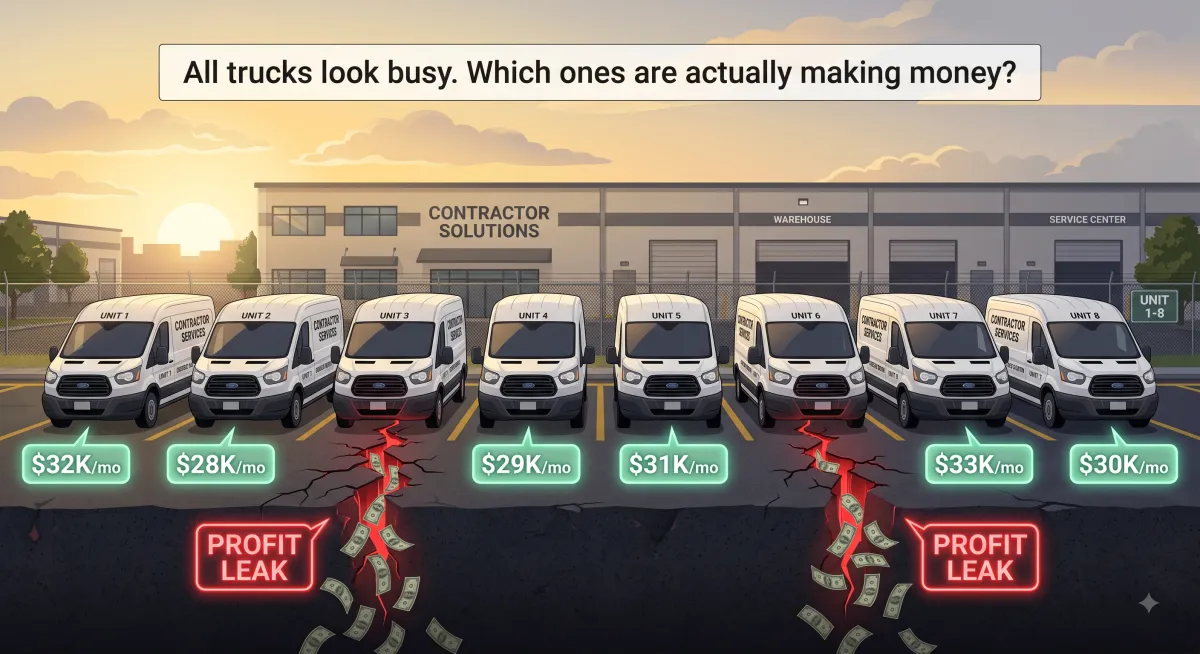
No idea which truck or department is dragging the average down.
Hiring decisions are guesses: when, who, and whether you can even afford it.
Tax surprises, because nobody looks at the numbers until the return.
Owner buried in operations instead of steering the company.
Growing broke: revenue and headcount up, working capital stretched thin, one slow month from a cash crisis.
Where they get it wrong:
Blind to revenue per truck, which is the cleanest read on whether you added capacity or just cost.
Ignoring AR aging until it turns into a cash problem.
No monthly review cadence, so problems show up in April instead of when you could have fixed them.
No handle on customer acquisition cost or marketing ROI: spending on ads and leads with no idea what actually pays back.
Department managers with no P&L in front of them, so nobody below the owner owns a number.
Books not clean enough to borrow against or sell. The day you want a line of credit or an exit, the mess costs you.
| Number | Target | Why it matters |
|---|---|---|
| Gross margin per job | Installs: 42–52% Service: 55–65% | Under target means you priced it wrong. You want to know before you bid the next one, not at tax time. |
| Net profit margin | 8–18% | The scoreboard. Under the range, something structural is leaking. |
| Revenue per truck | $300K+ (tracked and known) | Helps you spot efficiency problems and tells you when you can actually add capacity. |
The system at this stage:
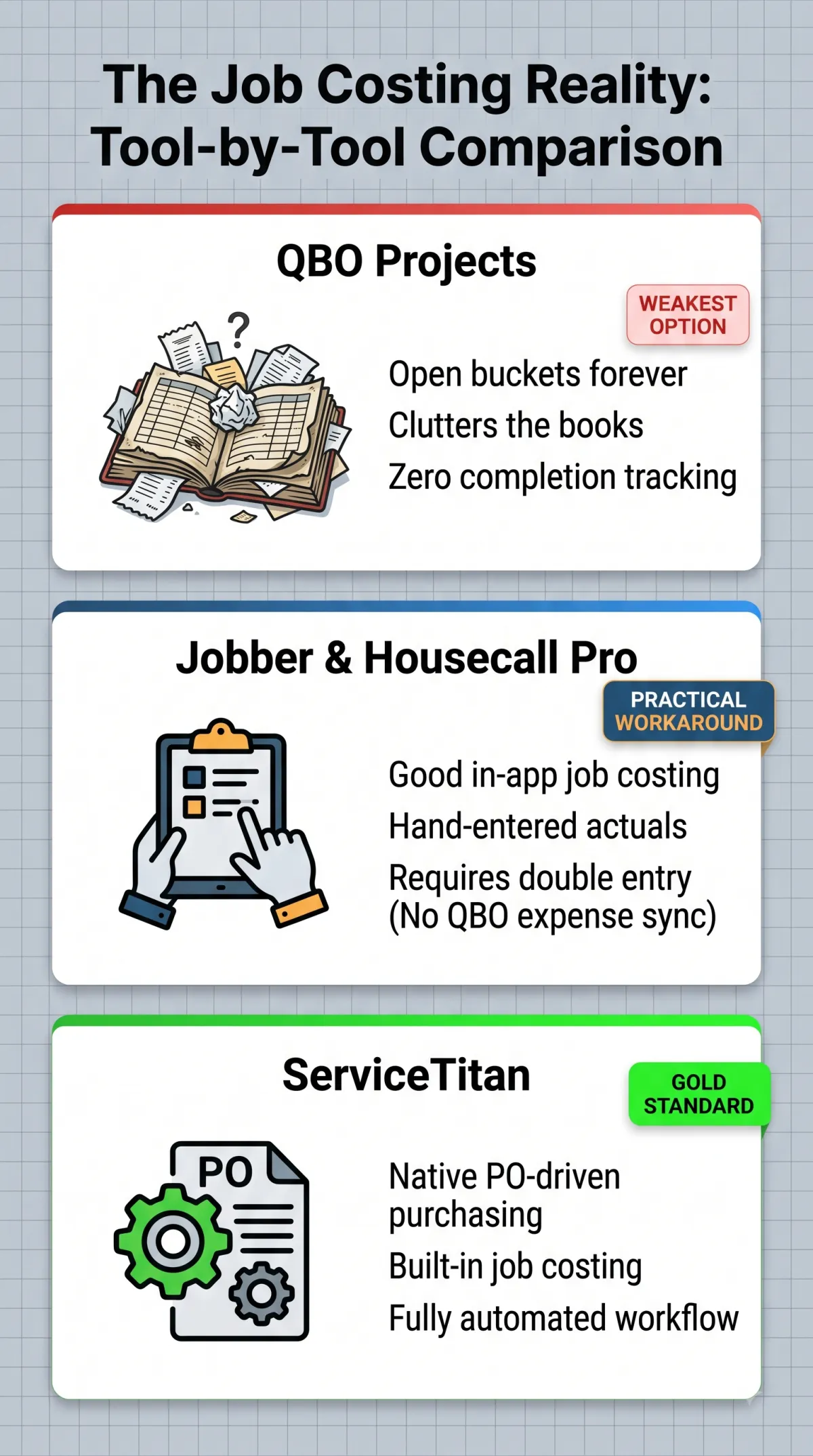
Field service software: This is where ServiceTitan (or an equivalent) finally makes sense with real PO-driven purchasing, native job costing, departmental reporting. The job-costing headache from the earlier stages mostly goes away, because costing is built into the job flow instead of hand-entered.
Books: Departmental gross profit and a monthly close with a reporting layer so you see the business without digging for it.
The Honest Truth About Job Costing
This is where these shops get hurt the most, so I’ll be straight about it. For a residential HVAC shop on QuickBooks Online, below ServiceTitan size, there is no clean, off-the-shelf answer. The tools that do job costing well, built it for QuickBooks Desktop or for enterprise. The platforms the industry actually runs on like Housecall Pro and Jobber never built purchasing or expense-to-job, because their market didn’t ask for it. That’s not you missing something. It’s a real hole.
Here’s how I’d actually handle it:
Evaluate the software on everything it does from dispatch, scheduling, invoicing, quoting. Then, for profitability, ask one more question: can it take actual expense costs so job costing lives in the FSM?
HCP and Jobber can. You enter actual material costs against the job and it’s great for costing. It won’t sync to QBO, so it’s double entry, and it’s still worth doing to stay on top of profitability.
QBO Projects is the cheaper, lower-quality option. It works, but it doesn’t even know when a job is done which makes it an open bucket forever and it clutters the books.
Labor is the easy half. Time tracking plus a burden rate gets you actual hours at real cost with barely any extra work.
Don’t cost every job. Cost the jobs your numbers can’t explain. When the P&L flags a job type coming in soft and you don’t know why, that’s when you pull those jobs apart.
A few newer tools claim to close this gap. Kick the tires yourself before you trust the marketing. Until someone actually builds it, the real Phase 1–2 answer is actuals entered by hand in the FSM plus costing by exception. It’s not elegant, but it’s honest, and it’s more than most shops your size are doing.
A few things that stay true at every stage
Revenue is vanity, margin is sanity, cash is king. Every stage, in that order.
Your books are a decision tool, not a tax chore. Look at them once a year and they’re working for the IRS, not for you.
The number you’re avoiding is the one that’s bleeding you.
A deposit isn’t profit. It’s someone else’s money you haven’t earned yet.
Hire to your next constraint, not your current one.
Quick Reference Tables
| System layer | Stage 0 | Stage 1 | Stage 2 | Stage 3 |
|---|---|---|---|---|
| Bank & separation | EIN, LLC & business checking | Add Profit First & credit card (with caution) | Automate allocations | 13-week cash-flow forecasting |
| Scheduling & dispatch | Google Calendar | FSM scheduling | FSM dispatch board | FSM routing optimization |
| Field service software | — | Jobber or HCP equivalent | Jobber or HCP equivalent | ServiceTitan or equivalent |
| Invoicing & getting paid | QBO invoice | Collect at completion via FSM | Add service agreements | — |
| Payments & financing | ACH, check, card | — | Add financing | In-field financing |
| Job costing | Not yet | QBO Projects or manual entry in FSM | FSM actuals + labor with burden | FSM native costing workflows |
| AP & receipts | QBO capture | Dext | Add Ramp for cards | Leverage Ramp A/P |
| Payroll & time tracking | — | Owner payroll (Gusto / Patriot) | Add time tracking within FSM | Add benefits (medical, 401k, PTO) |
| Sales tax & 1099s | Learn state rules | Collect / remit; W-9s for all subs before pay | — | — |
| Books, close & reporting | Trades COA with COGS split | Monthly reconcile + P&L review | Monthly close + variance analysis | Departmental gross profit |
| Number | Target | Why it matters |
|---|---|---|
| Personal survival number | Dependent on your household | What your household costs to run for one month. |
| Startup + runway capital | Dependent on household & starting equipment | The real cash you need in the bank before you quit — not the optimistic version. |
| Gross margin per job | Installs: 42–52% Service: 55–65% Blended: 50%+ | Under target means you priced it wrong. Know before you bid the next one, not at tax time. |
| Owner’s pay | Planned withdrawals (see Profit First) | If you’re just taking the leftover scraps, the business is training you to work for free. |
| Collected at completion | Near 100% | Getting paid in the driveway is the single fastest fix for cash flow. |
| Overhead % of revenue | 20–35% | Keeping this in check keeps net margin in the black. |
| Break-even hourly rate | Known, priced above | Charging $85 when you break even at $90 means every billed hour costs you money. |
| AR over 30 days | Minimal | Growth eats cash. Drifting AR turns a profitable month into a payroll scramble. |
| Net profit margin | 8–18% (varies by stage) | Under this range, something structural is leaking away your profit. |
| Revenue per truck | $300K+ | Flags efficiency issues in the business or with techs, and tells you when to add capacity. |
Frequently Asked Questions
Why does my HVAC business have more trucks but less money in the bank?
Because revenue grew but several costs are hiding. The usual culprits at 2-4 trucks:
- You're not loading the full labor burden (payroll taxes, workers' comp, benefits, truck, fuel, and windshield time) into your job costs, so jobs that look profitable are actually losing.
- Overhead like rent and office wages never got baked into your pricing
- You're blending service and install into one margin number, which lets one quietly subsidize the other.
Split your margins by work type, load the full burden into every job, and the leak usually shows itself.
What gross margin should an HVAC business target?
Installs between 42-52%
Service between 55-65%
Blended around 50%
At the fleet stage, the scoreboard is net profit margin, generally in the 8 to 18 percent range.
When should an HVAC business move to ServiceTitan?
Usually at the 5 to 15 truck, $1.2M to $5M stage because that's where the price stops being crazy relative to what it does:
- PO-driven purchasing
- Native job costing
- Departmental reporting.
Below that, Jobber or Housecall Pro is the right operating system. Jumping to ServiceTitan too early means paying for capability you can't use yet.
How do I do job costing for an HVAC business on QuickBooks Online?
Below ServiceTitan size there's no clean off-the-shelf answer, and that's a real gap, not you missing something. The practical method:
- Enter actual material costs against the job in your field service software (Jobber and Housecall Pro can do this, though it won't sync to QuickBooks, so it's double entry)
- Get labor from time tracking plus a burden rate
- Don't cost every job - cost by exception, pulling apart the job types your P&L flags as coming in soft.
QBO Projects is a cheaper, lower-quality fallback that works but clutters the books."
Who should an HVAC owner hire first?
Usually an office person, but it can be a second technician; it depends on your bottleneck. Figure out where your time actually goes: if it's phones, scheduling, and invoicing, hire the office; if it's the work itself, hire the tech. For an efficient solo operator, a part-time office hire often unlocks more revenue than another truck. The rule at every stage: hire to your next constraint, not your current one.
What financial numbers should an HVAC owner watch?
Two you never stop watching at any size:
- Gross margin (are you underpricing?)
- Net margin (is overhead bloating?).
Then the sharpest lens changes by stage:
Stage 0: Your personal survival number before you go solo
Stage 1: Gross margin per job when you're solo
Stage 2: Fully-burdened margin split by service versus install once you're hiring
Stage 3: Net profit margin backed by a departmental P&L once you're running a fleet.
Wherever you are on this map, you need books you can actually make decisions from. That's what I do, trades-only. Book a free Profit Leak Audit and we'll find where your money's leaking at your stage.
Related Resources
Free Resources for all HVAC Owners:
Chart of Accounts
Labor Burden Calculator
Typical Leaks We See
and More
90-Day Moneyback Guarantee
We stand by our work—no excuses, no fine print. If you're not 100% satisfied within the first 90 days, we'll refund up to 50% of one-time investments or 100% of recurring service fees. Your success is our priority, and we’re confident in delivering results that matter.
Accounting 4 Trades




Copyright 2026
All Rights Reserved
https://storage.googleapis.com/msgsndr/p98iMZ6oQEd0B8FNCsvk/media/678a7c4da120156f79a7e704.jpeg
https://storage.googleapis.com/msgsndr/p98iMZ6oQEd0B8FNCsvk/media/67763277b0a11f9c9fbd213c.jpeg